At the end
of the preceding millennium, we kneed many tests in favour of the authenticity
of the H. Shroud: pollens of ancient vegetations, the plot "spine of fish" of
the tissue, polymerization and strong oxidation, blood of group AB,
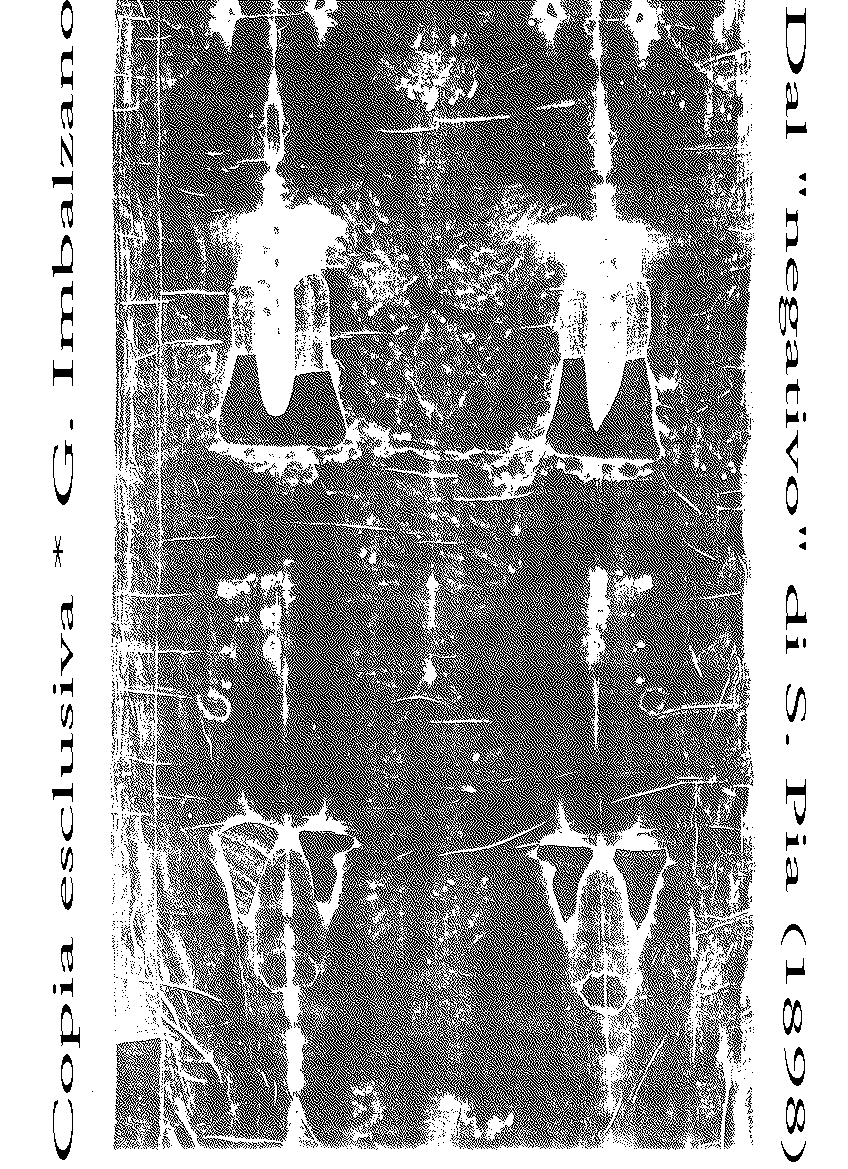
"negativeness" of the image. also more, the image is orthogonal and
three-dimensional, he reproduce scientifically the crucifixion to the wrists and
the nature of the coagulations, they exist verisimilar reproductions on ancient
coins and other finds.
Moreover,
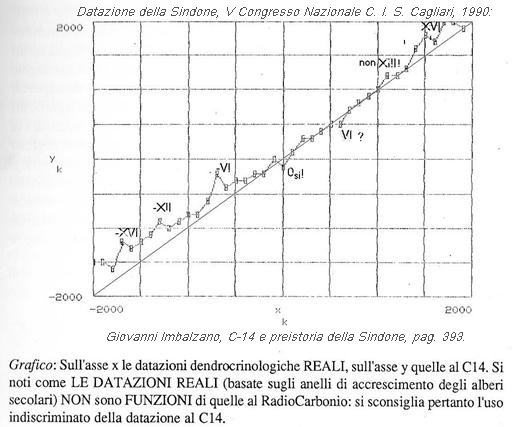
here arrives the dating to the C-14. Well, the end non secondary of this writing
is show that at straight the nuclear history of the C-14 and, as occasion
serves, the existence of the supernovas constitutes an exact and definitive
test, above all in respect of the history of the shroud and of its geographical
position in centuries.
To such
purpose, it is better to speak of originality rather than authenticity of the
shroud: literally, only the Holy Spirit can furnish ( to believers ) the true
proof of authenticity, that involves not simply the human nature of Christ, but
also the divine one.
In any
case, by paying attention to this eminent problem, memory of some biblical
passages seems opportune, in historically important points.
The nature
of the object and just the same scientific method induce to follow the inverse
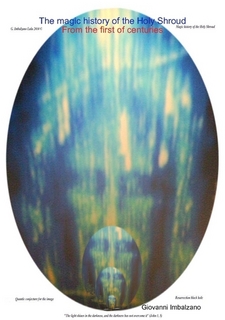
historical way , toward the past and bring a magic charm to this narration, that
is illuminated one's own from the star of magus’s... from his end to his
beginning!
“In the teeth of the known dating of the carbon dating, it remains likely that the Turin
shroud is not a forgery.”
(André
Cherpillod, Shroud of Turin the "impossible" object, 1996 &
Didaskaleion of Turin 1998)
“After months examining microscopic samples, the team concluded in January that the Shroud of
Turin is centuries older than its carbon date. Dr. Garza said the shroud's
fibres are coated with bacteria and fungi that have grown for centuries. Carbon
dating, he said, had sampled the contaminants as well as the fibres”
(Shroud of Turin research,
1993)

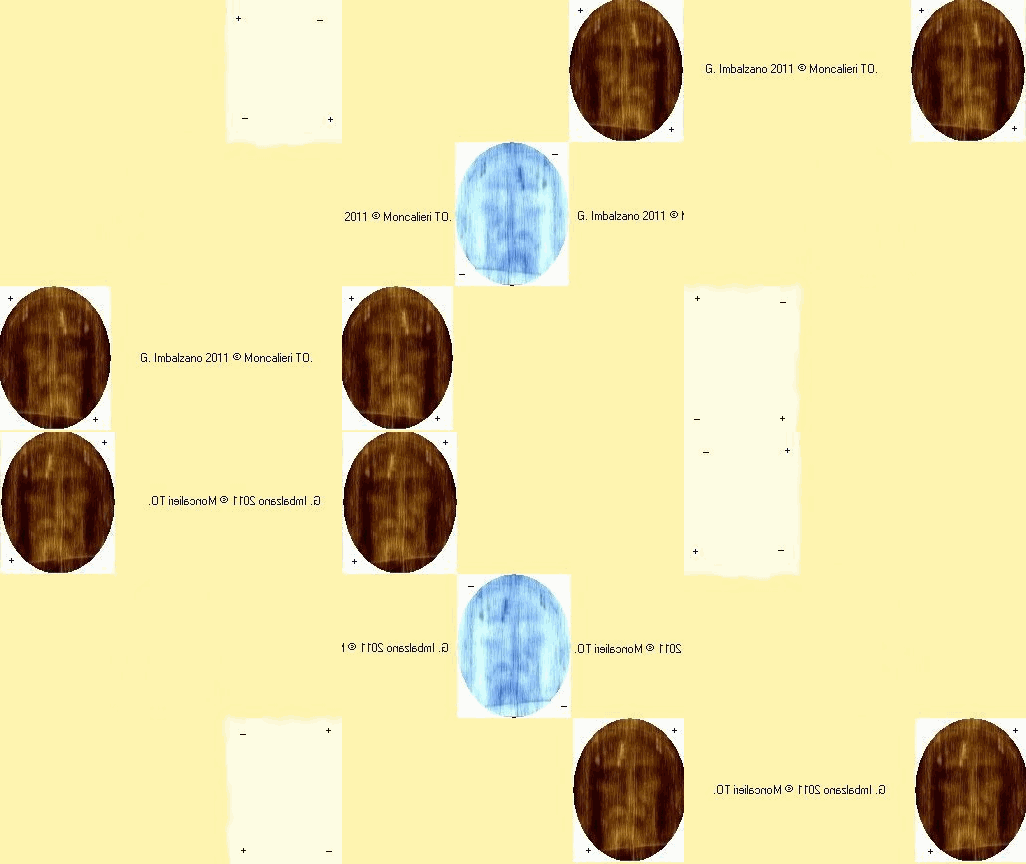 + from anti - Matter|
 †
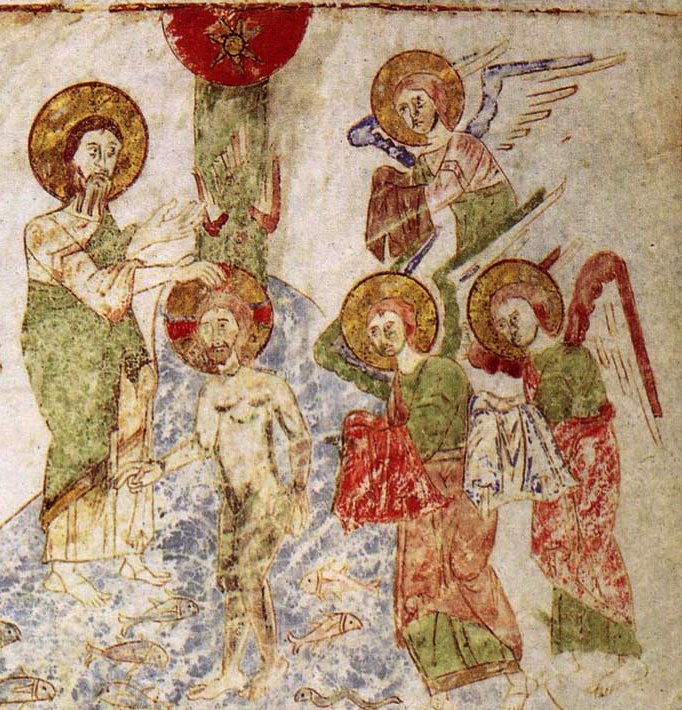
Dopo la Trasfigurazione verso il Padre †
†
Dopo la Trasfigurazione verso il Padre †
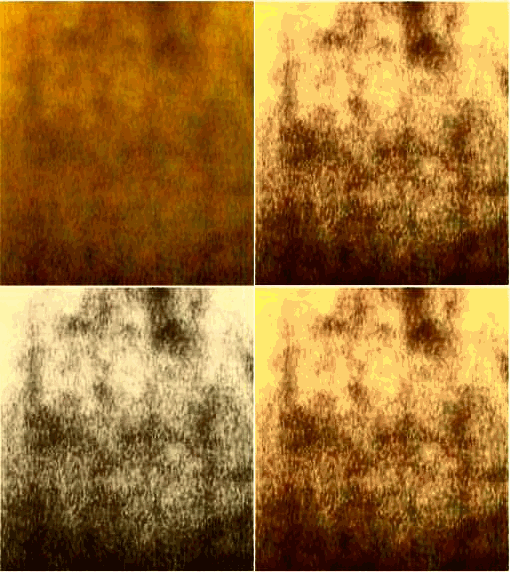
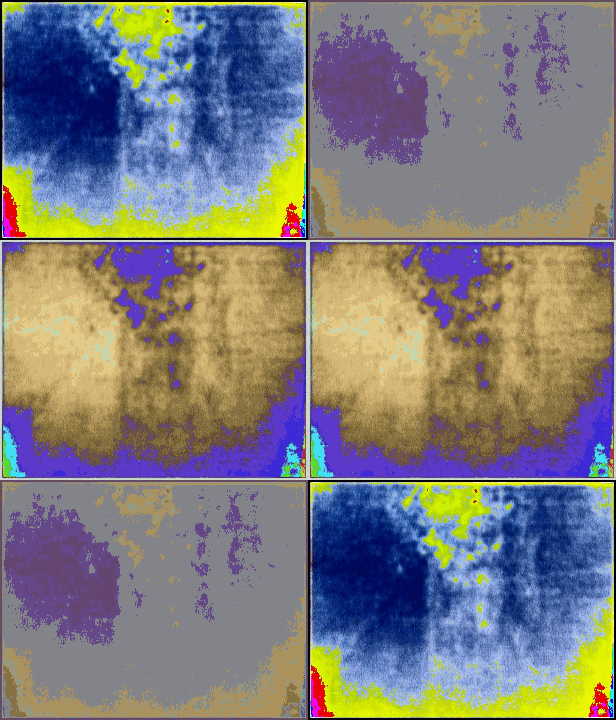
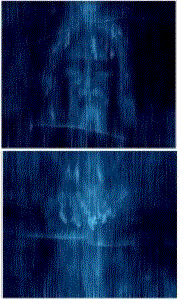
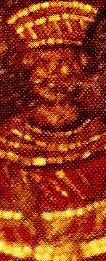 ispirato dalla nuvoletta della Sindone?
Per quanto riguarda l'autenticità di questa nuvola, ove la si pensi sovrapposta ad arte
all'originale potremmo supporre l'intervento di un Patriarca, vissuto dopo il I Concilio di
Costantinopoli (381) sul Santo Spirito ed esperto nel disegno, quale fu Rabbula (avverso ai
negatori della perfetta divinità del Cristo) ma ciò contrasterebbe con la sua innegabile religiosità.
È probabile che la nuvola, che si trova presso il Viso del Trono sacro (e raschiata più in basso) sia
stata causata da un'evaporazione, come avvenne anche sulla "Tela" che ricopriva la Sindone, per la
presenza del Lume votivo ricordato da Eulavio Forse per questo, le imitazioni del Mandilion
rappresentano la barba di Cristo con un "pizzetto", simile alla punta della nuvola che si espande con
la forma di un Volto umano, fin dal VI secolo (L Fossati "La cosiddetta acheropita di Edessa",
La Sindone, II Convegno 1981, CLUEB Bologna) anche se il più famoso esempio risale al III
secolo, con il Cristo docente all'Ipogeo degli Aurelii, in Roma. La nuvoletta si scorge anche sulla retro-faccia del Lenzuolo [Note finali del § III e foto
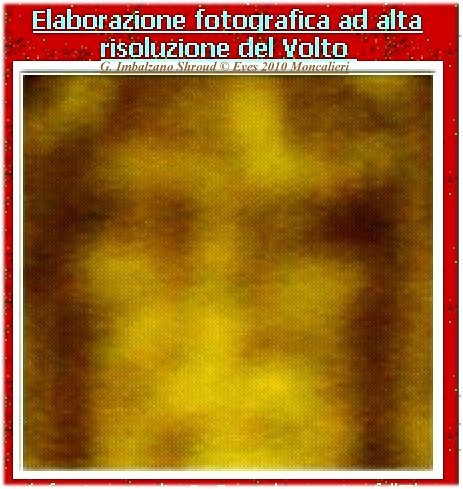
Ghiberti in Complement.2] non così la parte principale del Volto di tipo ebraico in semi-profilo
(qui ripetuto nel § III, accanto a un’immagine del Big Bang) appena al disotto di quello della
Sindone ben noto. Nei dipinti sacri non c’è alcuna traccia del suddetto semi-profilo, a meno di non rivolgersi a certe
figure di Maometto del XV secolo, d’ispirazione cristiana, o meglio al Cristo di Dafni e dell’Ipogeo
del 190/210 dC ["Carta d’identità", publ.]. Ma non potevano riferirsi direttamente alla Sindone, perché
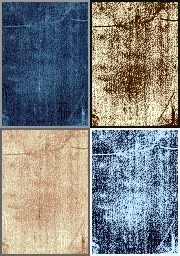
prima del nostro secolo quest’immagine risultava invisibile; infatti, proviene da appropriati filtraggi
al violetto, e solo dopo aver sovrapposto la parte frontale con quella dorsale del Lenzuolo.
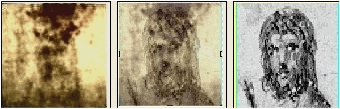
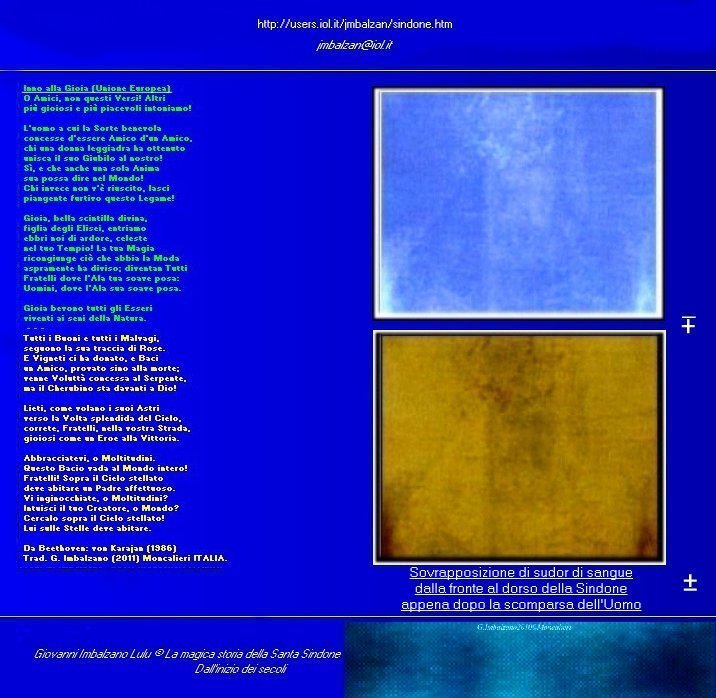
La sovrapposizione (qui al centro) tra il positivo dell’immagine e il Cristo Ipogeo è molto
significativa: ci fa pensare che all’ispirazione di un condiscepolo di Luca di Siria, osservando il
rilievo del 3\ che ricompare sopra il ricciolo, come nella Madonna d’Antiochia [publ.] e la datazione
siriaca XX’ riportata all’inizio [publ.], oltre che il possesso del Telo da parte di Palut, nominato in
questo periodo (212) dal Vescovo filo-romano ad Antiochia, di cui più avanti [“Monaci conservatori”].
ispirato dalla nuvoletta della Sindone?
Per quanto riguarda l'autenticità di questa nuvola, ove la si pensi sovrapposta ad arte
all'originale potremmo supporre l'intervento di un Patriarca, vissuto dopo il I Concilio di
Costantinopoli (381) sul Santo Spirito ed esperto nel disegno, quale fu Rabbula (avverso ai
negatori della perfetta divinità del Cristo) ma ciò contrasterebbe con la sua innegabile religiosità.
È probabile che la nuvola, che si trova presso il Viso del Trono sacro (e raschiata più in basso) sia
stata causata da un'evaporazione, come avvenne anche sulla "Tela" che ricopriva la Sindone, per la
presenza del Lume votivo ricordato da Eulavio Forse per questo, le imitazioni del Mandilion
rappresentano la barba di Cristo con un "pizzetto", simile alla punta della nuvola che si espande con
la forma di un Volto umano, fin dal VI secolo (L Fossati "La cosiddetta acheropita di Edessa",
La Sindone, II Convegno 1981, CLUEB Bologna) anche se il più famoso esempio risale al III
secolo, con il Cristo docente all'Ipogeo degli Aurelii, in Roma. La nuvoletta si scorge anche sulla retro-faccia del Lenzuolo [Note finali del § III e foto
Ghiberti in Complement.2] non così la parte principale del Volto di tipo ebraico in semi-profilo
(qui ripetuto nel § III, accanto a un’immagine del Big Bang) appena al disotto di quello della
Sindone ben noto. Nei dipinti sacri non c’è alcuna traccia del suddetto semi-profilo, a meno di non rivolgersi a certe
figure di Maometto del XV secolo, d’ispirazione cristiana, o meglio al Cristo di Dafni e dell’Ipogeo
del 190/210 dC ["Carta d’identità", publ.]. Ma non potevano riferirsi direttamente alla Sindone, perché
prima del nostro secolo quest’immagine risultava invisibile; infatti, proviene da appropriati filtraggi
al violetto, e solo dopo aver sovrapposto la parte frontale con quella dorsale del Lenzuolo.
La sovrapposizione (qui al centro) tra il positivo dell’immagine e il Cristo Ipogeo è molto
significativa: ci fa pensare che all’ispirazione di un condiscepolo di Luca di Siria, osservando il
rilievo del 3\ che ricompare sopra il ricciolo, come nella Madonna d’Antiochia [publ.] e la datazione
siriaca XX’ riportata all’inizio [publ.], oltre che il possesso del Telo da parte di Palut, nominato in
questo periodo (212) dal Vescovo filo-romano ad Antiochia, di cui più avanti [“Monaci conservatori”].
 Nel Cristo dell’Ipogeo, il segno
 †
†
 {Qui a fianco i simboli numerici usati dal X al XIV secolo}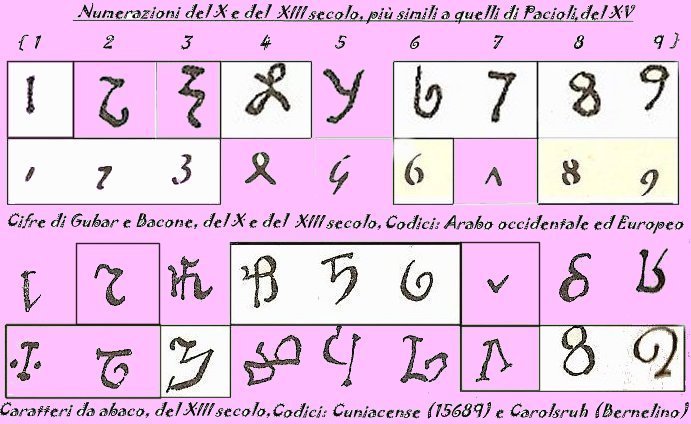


 ‡
‡ 
 un'ottima ragione perché Baradeus lasciasse ritrovare a Edessa la Sindone, con una luce votiva ancor accesa!
 :..CODEX
 # # # # # #